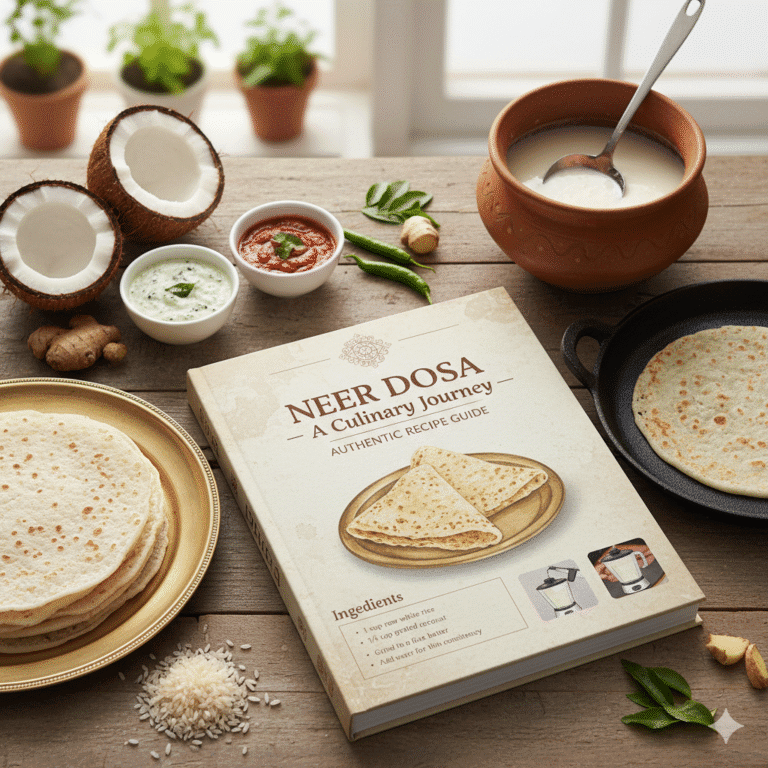
Welcome to our comprehensive guide on the neer dosa recipe, a timeless staple from the coastal regions of Karnataka that captures the essence of simplicity and flavor in every bite. If you’re wondering what is neer dosa, it’s essentially a “water dosa”—a thin, delicate crepe made from a watery rice batter, known for its lacy texture and subtle coconut aroma. In this 2500+ word blog post, we’ll dive deep into the neer dosa recipe, uncover neer dosa calories for health-conscious eaters, and provide an easy how to make neer dosa tutorial. Whether you’re a beginner in South Indian cooking or a seasoned home chef, this post will equip you with everything you need to master this gluten-free breakfast. Let’s get started!

What is Neer Dosa? Unraveling the Mystery of This South Indian Gem
At its core, what is neer dosa? Neer dosa, or neer dose as it’s affectionately called in Tulu, translates literally to “water dosa.” This name isn’t just poetic—it’s descriptive of the batter’s consistency, which is as thin as water, resulting in ultra-light crepes that melt in your mouth. Originating from the Tulu Nadu region in Karnataka, India, neer dosa is a hallmark of Udupi-Mangalorean cuisine. Unlike traditional dosas that require fermentation, neer dosa skips that step, making it a quick and fuss-free option for busy mornings.
Imagine biting into a soft, net-like pancake that’s neither crispy like a masala dosa nor chewy like an idli. Neer dosa is all about elegance—its surface forms intricate lace patterns as it cooks, trapping flavors from accompanying chutneys or curries. It’s naturally vegan, gluten-free, and versatile, pairing beautifully with sweet coconut chutneys or spicy vegetable stews. In Mangalorean households, neer dosa is more than food; it’s a symbol of coastal hospitality, often served during festivals like Ganesh Chaturthi or as a comforting weekend brunch.
But why has the neer dosa recipe gained global popularity? In today’s fast-paced world, its no-fermentation appeal and minimal ingredients resonate with health enthusiasts. A single neer dosa clocks in at just 50-80 calories, making neer dosa calories a low-key affair for those watching their intake. As we explore further, you’ll see why learning how to make neer dosa is a game-changer for your breakfast routine.
The Unique Texture and Flavor Profile of Neer Dosa
What sets neer dosa apart is its texture: paper-thin yet resilient enough to scoop up gravies without tearing. The flavor comes from fresh grated coconut, which adds a subtle sweetness and richness without overpowering the rice base. Salt ties it all together, enhancing the natural earthiness of the grains. If you’ve ever wondered what is neer dosa beyond the basics, it’s this harmonious blend that makes it addictive—light enough for multiple servings, flavorful enough to crave seconds.
In essence, neer dosa embodies the philosophy of South Indian cooking: using humble ingredients to create something extraordinary. Whether steamed with jaggery for a dessert twist or folded around a spicy filling, its adaptability keeps the neer dosa recipe relevant across generations.
The Origins and Cultural Significance of Neer Dosa
Delving into history, the neer dosa recipe traces its roots to the fertile coastal belt of Karnataka, where rice is abundant and coconuts sway in the breeze. Tulu Nadu, encompassing districts like Dakshina Kannada and Udupi, is the epicenter of this dish. Legend has it that neer dosa evolved as a fisherfolk staple—quick to prepare with readily available rice, it fueled long days at sea. Over time, it became integral to Udupi cuisine, influenced by the region’s Jain and Brahmin communities who favored sattvic (pure) foods.
Culturally, neer dosa shines during rituals and celebrations. In Mangalore, it’s a must at weddings, symbolizing prosperity with its lacy “net” resembling a fisherman’s weave. For everyday life, it’s a breakfast of choice in local darshinis (eateries), where steaming platters emerge from banana leaves. The neer dosa recipe has even crossed borders, popping up in diaspora communities in the UAE and the US, where it’s adapted with quinoa for a modern twist.
Understanding this heritage adds depth to how to make neer dosa. It’s not just cooking; it’s connecting to a 500-year-old tradition of resourcefulness and flavor.
Neer Dosa in Modern Indian Fusion Cuisine
Today, chefs are reimagining the neer dosa recipe in fusion delights—like neer dosa tacos filled with avocado and salsa or sweet versions with Nutella. Yet, neer dosa calories remain a draw for fitness bloggers, who tout it as a low-carb alternative to pancakes. This evolution keeps the dish alive, blending old-world charm with new-age innovation.
Neer Dosa Calories: A Nutritional Breakdown for Health Enthusiasts
One of the most searched aspects of the neer dosa recipe is its calorie count, and for good reason—neer dosa calories are impressively low, making it ideal for weight management. A standard 40-50g neer dosa contains about 50-80 calories, depending on size and coconut quantity. This is lower than a plain dosa (around 100 calories) or even a slice of bread (80 calories), thanks to the absence of oil in the batter and minimal cooking fat.
Breaking it down nutritionally:
- Carbohydrates: 10-15g per dosa, primarily complex carbs from rice for sustained energy.
- Protein: 1-2g, modest but boosted when paired with lentil-based curries.
- Fat: 0.5-1g, mostly healthy medium-chain triglycerides from coconut.
- Fiber: 0.5-1g, aiding digestion.
- Other Nutrients: Traces of iron, magnesium, and B-vitamins from rice; potassium from coconut.
For context, two neer dosas with chutney total under 150 calories—a fraction of a typical cereal bowl. Neer dosa calories shine in diabetic diets too, with a low glycemic index due to the unfermented batter. Studies on South Indian staples highlight how such dishes support heart health by replacing refined grains.
Comparing Neer Dosa Calories to Other Breakfast Options
| Breakfast Item | Calories (per serving) | Carbs (g) | Protein (g) | Fat (g) |
|---|---|---|---|---|
| Neer Dosa (1 piece) | 60 | 12 | 1.5 | 0.8 |
| Plain Dosa | 104 | 18 | 2.5 | 2 |
| Idli (2 pieces) | 120 | 22 | 3 | 1.5 |
| Oats Porridge | 150 | 25 | 5 | 3 |
| Whole Wheat Toast | 80 | 15 | 3 | 1 |
As the table shows, neer dosa calories make it a winner for calorie-controlled meals. Customize by reducing coconut for even fewer calories—dropping to 47 per 40g serving. Always remember, total neer dosa calories depend on portions and sides; opt for veggie sambar to keep it under 200 for a full meal.
Ingredients for the Perfect Neer Dosa Recipe
Mastering the neer dosa recipe starts with quality ingredients. For 10-12 dosas, you’ll need:
- 1 cup raw rice (dosa rice or sona masoori for best results—short-grain varieties yield softer textures).
- ¼ to ½ cup fresh grated coconut (frozen works; adds creaminess without spiking neer dosa calories).
- Salt to taste (about ½ tsp).
- Water (as needed for grinding and thinning—aim for a pourable consistency).
Optional add-ins: A tablespoon of cooked rice for extra softness, or poha (flattened rice) for fluffiness. These keep the neer dosa recipe simple yet authentic.
Sourcing tip: Use organic rice to minimize pesticides, enhancing the health profile alongside low neer dosa calories.
Why Coconut is Key in the Neer Dosa Recipe
Coconut isn’t just a flavor booster; it binds the batter and imparts antimicrobial properties, preserving freshness. In the neer dosa recipe, it contributes about 20 calories per dosa but packs antioxidants—worth it for taste and nutrition.
How to Make Neer Dosa: Step-by-Step Guide
Ready to try how to make neer dosa? This neer dosa recipe takes 20 minutes active time plus soaking. Follow these steps for lacy perfection.
- Soak the Rice: Rinse 1 cup rice until water runs clear. Soak in 2 cups water for 4-6 hours (or overnight for busy schedules). This softens grains without fermentation.
- Grind the Batter: Drain rice and add to a blender with ¼ cup grated coconut and ½ tsp salt. Pour in ½ cup water gradually. Blend to a smooth, fine paste—no grains left! The batter should be thick like pancake mix at this stage.
- Thin the Batter: Transfer to a bowl and add water (½-¾ cup) until it’s watery—test by pouring; it should flow freely. Rest for 15-30 minutes; this allows flavors to meld without fermentation.
- Heat the Tawa: Use a non-stick or cast-iron tawa on medium-high. No oil needed initially—neer dosa cooks dry for crisp edges. Wipe with a damp cloth if too hot.
- Pour and Cook: Ladle ¼ cup batter from a height (6 inches) onto the center. It spreads naturally into a thin circle. Tilt the pan gently for even coverage. Bubbles form quickly, creating the signature lace.
- Flip and Serve: Cook 1-2 minutes until edges lift and bottom is golden (30 seconds flip if using oil). No need to cook the top—it’s steamed by the batter’s moisture. Fold into a triangle and stack on a plate.
There you have it—your first batch of neer dosa! This how to make neer dosa method yields 10 soft crepes, each under 60 neer dosa calories.
Common Mistakes in How to Make Neer Dosa and How to Avoid Them
Newbies often over-thicken the batter, resulting in thick pancakes. Remember: watery is key. Another pitfall? Cold tawa—always preheat for that lace effect. With practice, how to make neer dosa becomes second nature.
Tips and Tricks for the Best Neer Dosa Recipe
Elevate your neer dosa recipe with these pro tips from Mangalorean kitchens.
- Batter Consistency: It should coat the back of a spoon thinly. Too thick? Add ice water for extra lightness.
- Grinding Hack: Use a wet grinder for silkier texture; blenders work but pulse intermittently to avoid heat buildup.
- Tawa Temperature: Medium-high (like for eggs)—test with a water drop; it should sizzle and evaporate instantly.
- No-Stick Secret: A drop of oil post-first dosa prevents adhesion without adding calories.
- Storage: Leftover batter lasts 2 days in the fridge; thin with water before use. Cooked dosas reheat in a damp towel over steam.
These ensure your neer dosa recipe is foolproof, keeping neer dosa calories intact.
Advanced Tip: Achieving the Perfect Lace in Neer Dosa
Pour from a height and swirl the ladle—the batter’s fall creates air pockets for that net-like pattern. Patience here pays off in aesthetics and flavor absorption.
Delicious Variations of the Neer Dosa Recipe
While the classic neer dosa recipe is unbeatable, variations keep it exciting.
- Masala Neer Dosa: Add chopped onions, green chilies, and cumin to the batter before cooking. Spice level up, calories +20 per dosa.
- Sweet Neer Dosa: Mix jaggery syrup into batter; serve with ghee. A festive twist without spiking neer dosa calories much.
- Stuffed Neer Dosa: Roll around potato masala—like a lighter masala dosa.
- Veggie Neer Dosa: Blend spinach or beetroot into batter for color and nutrients; neer dosa calories stay similar at 70.
Experiment with how to make neer dosa variations to suit moods—savory for brunch, sweet for tea time.
Gluten-Free Neer Dosa Twists for Dietary Needs
For celiacs, the base is perfect; swap rice for millet for a protein boost, adjusting neer dosa calories to 65.
Serving Suggestions and Pairings for Neer Dosa
The neer dosa recipe shines with sides that complement its neutrality.
- Classic Chutney: Coconut-onion blend (adds 30 calories).
- Sambar: Lentil-veg stew for protein punch.
- Chicken Curry: For non-veg lovers in Mangalore style.
- Dessert Pair: Ghee and powdered sugar for kids.
Serve on banana leaves for aroma. A platter of 4 dosas + sides = 250 calories meal.
Health Benefits of Neer Dosa: Beyond Low Neer Dosa Calories
Beyond neer dosa calories, this dish offers digestive ease from rice’s soluble fiber and coconut’s lauric acid for immunity. It’s hydrating (high water content) and blood-sugar friendly. Regular consumption supports gut health, per Ayurvedic principles.
For weight loss, pair with salads; for athletes, add paneer stuffing for protein. Overall, the neer dosa recipe promotes balanced eating.
Neer Dosa in Weight Loss Diets
At 60 calories each, neer dosa fits keto-lite plans when paired with eggs. Track via apps for precise neer dosa calories.
Frequently Asked Questions about Neer Dosa Recipe
Q: Can I make neer dosa without coconut? A: Yes, but flavor dims; use milk for creaminess. Neer dosa calories drop to 50.
Q: How long does neer dosa batter last? A: 2-3 days refrigerated; stir before use in how to make neer dosa.
Q: Is neer dosa gluten-free? A: Absolutely—rice-based, perfect for sensitivities.
Q: What’s the calorie difference in fried vs. dry neer dosa? A: Fried adds 20-30 neer dosa calories from oil.
More FAQs highlight why the neer dosa recipe is beginner-friendly.
Conclusion: Embrace the Neer Dosa Recipe Today
From what is neer dosa to mastering how to make neer dosa, this guide has unpacked the magic of this coastal treasure. With low neer dosa calories and endless versatility, it’s a must-try for any kitchen. Whip up the neer dosa recipe this weekend—your taste buds (and waistline) will thank you. Share your twists in comments!